


Why regular check-ups are important for your teeth
A regular dental check-up is more than just checking for cavities. Many problems with teeth and gums develop gradually and cause little or no discomfort in the beginning. By having your teeth checked regularly, changes can be identified early, and small problems can sometimes be prevented from becoming larger.
In this article, we explain what a regular check-up entails, what the dentist looks for, and how often a check-up may be advisable for you.
What is a regular dental check-up?
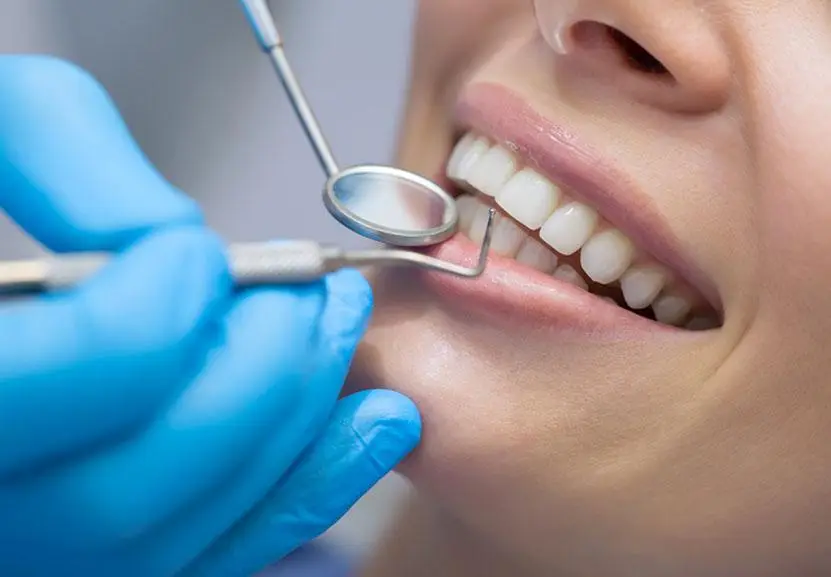
A regular check-up is an appointment where the dentist assesses the health of your mouth and teeth.
This involves more than just checking for cavities. The dentist also examines existing fillings, crowns, and other restorations, the gums, and any changes in the mouth.
Have you developed any complaints since your last appointment? Then the check-up is also a good time to discuss them.
Based on the findings, it can be determined whether treatment, additional research, or preventive advice is necessary.
What does the dentist check during a regular check-up?
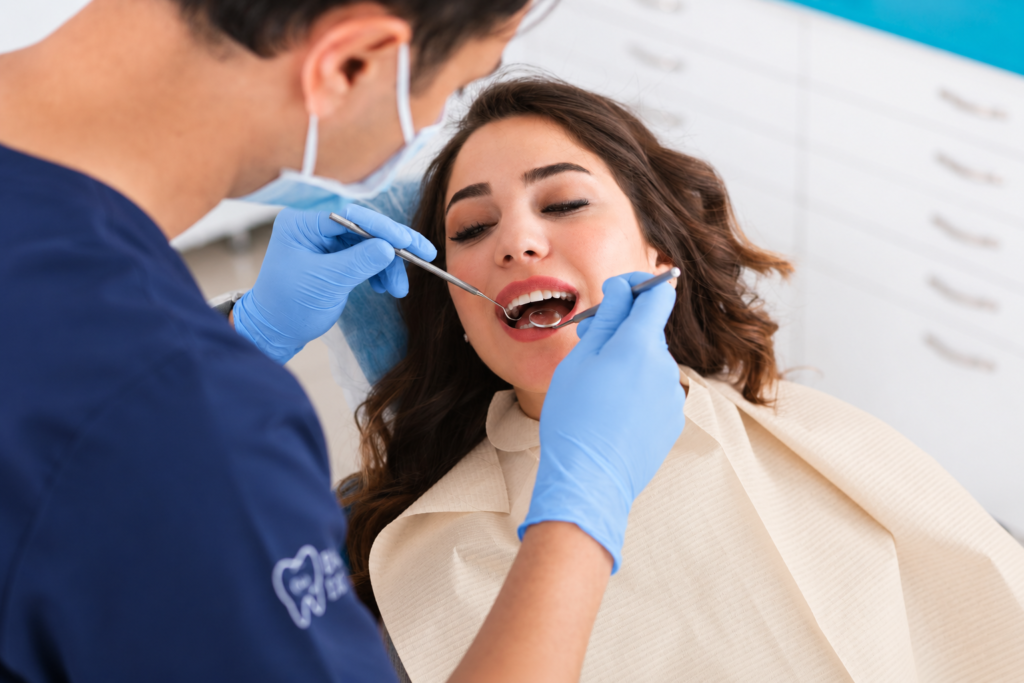
During a check-up, your teeth are systematically assessed.
The dentist looks at the teeth and molars, possible signs of caries, existing fillings and crowns, wear and fractures, and the condition of the gums.
Other parts of the mouth may also be examined, such as the tongue and mucous membranes.
Do you have implants, a bridge, or another dental construction? Then the dentist will also check if there are any abnormalities visible.
Which parts receive extra attention depends on your personal dental situation.
Why are regular check-ups important if you have no pain?
A common thought is that a visit to the dentist is only necessary when something hurts. The problem is that various dental conditions cause hardly any symptoms in the beginning.
For example, a small cavity can go unnoticed for a long time. Gum problems can also develop without clear pain.
If you wait until a problem starts to hurt, it may have become more extensive in the meantime.
Regular check-ups give the dentist the opportunity to recognize changes earlier.
Are the gums also checked?
Yes. Healthy gums are important for the preservation of your teeth and molars.
Bleeding, swollen, or receding gums can indicate inflammation.
Superficial inflammation of the gums is called gingivitis. When the supporting tissue and jawbone around teeth and molars are also affected in sensitive patients, we call it periodontitis.
Because periodontitis does not always cause clear pain, checking the gums can be important to identify problems in time.
When more extensive research or professional cleaning is required, an appointment with the dentist or dental hygienist can be scheduled for this.
Are X-rays taken at every check-up?
No. X-rays do not automatically have to be taken at every regular check-up.
The dentist assesses whether an X-ray is necessary for diagnostics at that moment.
X-rays can provide information about areas that cannot be fully assessed with a visual check alone. Think, for example, of certain spots between teeth and molars, around roots, or under existing restorations.
How often X-ray examination is needed varies per patient and depends, among other things, on the dental situation, previous findings, and the risk of new problems.
Is a regular check-up the same as a dental cleaning?
No. A regular check-up and a professional dental cleaning have different purposes.
During the check-up, the dentist assesses the health of your teeth and mouth.
In a dental cleaning, the emphasis is on removing plaque and tartar and, where necessary, guidance on daily oral care.
Some patients require regular professional cleaning, while for others it is necessary less often.
The dentist or dental hygienist can advise which interval suits your oral health.
How often should you go to the dentist for a check-up?
There is no check-up interval that is the same for everyone.
Many people are used to going to the dentist every six months. For some patients, that may indeed be an appropriate interval, but someone with stable and healthy teeth may be given a different check-up interval than someone with an increased risk of caries or gum problems.
The dentist looks at your oral health, previous dental problems, oral care, and other relevant risk factors.
Based on this, it can be determined when a next check-up is advisable.
Should children also go to the dentist regularly?
Yes. Regular check-ups are also important for children.
In children, the teeth are constantly changing. Baby teeth are replaced, permanent teeth erupt, and the way children care for their teeth is still developing.
During check-ups, the dentist can therefore look not only for cavities but also at the development of the teeth, oral care, and prevention.
By bringing children from a young age, they can also become familiar with the dentist in a calm way.
What happens if you don't go to the dentist for a long time?
If you do not have a check-up for a long time, it does not automatically mean that something is wrong with your teeth.
It does mean, however, that changes can go unnoticed for a longer period.
A starting problem can develop further during that period. A small cavity can become larger, gum problems can worsen, and a damaged restoration can deteriorate further.
The longer a problem develops, the more extensive the final treatment can sometimes become.
Have you not visited a dentist for years? There is no need for shame. A new check-up simply starts with looking at the current situation and discussing what might be needed.
When should you not wait until your next check-up?
A regular check-up is intended for situations where there are no acute complaints.
Do you experience severe toothache, a broken tooth, swelling, or another clear change in your mouth in the meantime? Then do not automatically wait until your next check-up appointment.
Contact the practice and describe your complaints. It can then be assessed how quickly an appointment is needed.
In the case of rapidly increasing swelling in combination with swallowing or breathing problems, immediate medical assessment is necessary.
Regular check-up at We Smile Tandartsen in Leiden
At We Smile Tandartsen in Leiden, we look at the health of your teeth, molars, and gums during a regular check-up. We discuss what we see and clearly explain when treatment or extra attention is needed.
Is everything healthy and stable? Then we will discuss when a next check-up is advisable for you.