


Do you suffer from jaw pain, a clicking jaw, or a tense feeling around your jaw joint? Perhaps you hear a popping sound when you open your mouth, experience pain while chewing, or wake up with tired jaw muscles.
Jaw complaints occur regularly and can have various causes. Sometimes the symptoms disappear on their own, but when the pain persists or your jaw moves less effectively, it is wise to have the cause investigated.
At We Smile Tandartsen in Leiden, we help you better understand your jaw complaints and determine which treatment is appropriate.
In this article, you will read how jaw complaints arise, which symptoms you can recognize, and what you can do yourself to reduce the complaints.
1. What are jaw complaints?
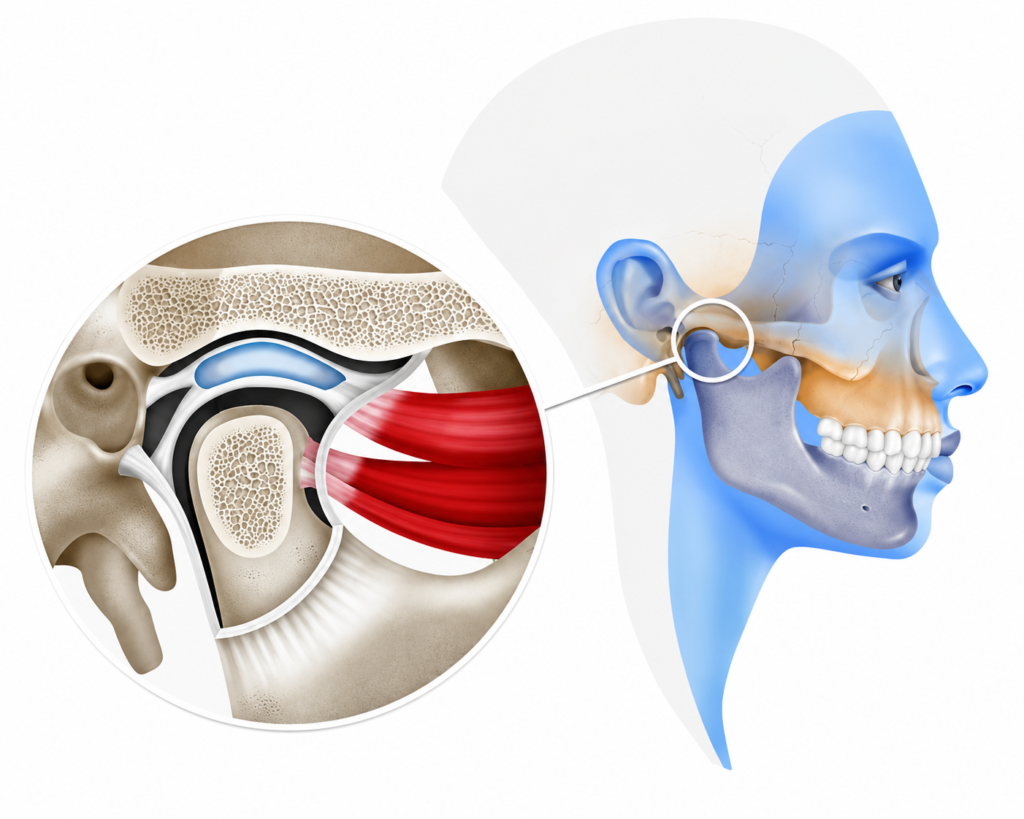
The jaw joint is located just in front of your ears and connects the lower jaw to the skull. Together with the chewing muscles, this joint ensures that you can talk, eat, yawn, and open and close your mouth.
When the chewing muscles or the jaw joint do not function properly, various complaints can arise. This is also known as temporomandibular dysfunction (TMD).
TMD can involve overloading of the chewing muscles, problems with the movement of the jaw joint, or a combination of both.
Not every complaint means that the jaw joint is damaged. For example, clicking sounds occur regularly without there being pain or a condition that requires treatment.
2. Which symptoms are associated with jaw pain and clicking sounds?
Jaw complaints can manifest in different ways. Some people mainly experience pain, while others notice that their jaw moves less smoothly.
Common symptoms include:
- Clicking or popping sounds when opening and closing the mouth.
- Pain at the jaw joint, often just in front of the ear.
- Pain during chewing, especially with hard or tough food.
- Tired or tense jaw muscles, for example, upon waking up.
- Difficulty opening the mouth or the feeling that the jaw is temporarily locking.
- Headache at the temples, sometimes in combination with neck complaints.
- Radiating pain towards the ear, cheek, or temple.
A clicking jaw without pain or restricted movement usually does not need to be treated.
When you also experience pain, cannot open your mouth properly, or notice that the symptoms are increasing, a dental examination is advisable.
3. What are the causes of jaw pain?
Jaw pain does not always have one clear cause. Often, multiple factors play a role simultaneously.
Teeth grinding and jaw clenching
With teeth grinding or jaw clenching, also known as bruxism, the chewing muscles are regularly and firmly tensed. This can happen both during the day and during sleep.
Long-term strain can lead to tired jaw muscles, muscle pain, and sometimes headaches. Teeth grinding can also cause wear and tear to the teeth.
Stress and tension
Stress can cause you to unconsciously clench your teeth. This can happen especially during concentrated work or in stressful situations.
When the chewing muscles do not relax sufficiently, pain and stiffness can develop.
Problems with the articular disc
Inside the jaw joint is a small cartilaginous disc, also called a meniscus. This helps the movements of the lower jaw to proceed smoothly.
When this disc temporarily changes position during movement, a clicking sound can occur.
This is not always painful and does not automatically mean that treatment is necessary.
Overloading the jaw
Chewing a lot of gum, eating hard food for long periods, or repeatedly opening the mouth extremely wide can worsen existing jaw complaints.
Injury or other conditions
Sometimes complaints arise after a fall, a blow to the jaw, or due to a condition of the jaw joint, such as osteoarthritis.
Dental problems, including infections, can also cause pain that is experienced as jaw pain.
4. What can you do yourself about jaw pain?
For mild jaw complaints, simple adjustments to your daily habits can already provide relief.
Let your jaw muscles relax
Try to consciously check during the day whether you are clenching your teeth. At rest, your upper and lower teeth should usually be slightly apart, while your lips are relaxed and closed.
Avoid overloading
Temporarily limit chewing on hard or tough foods. Avoid long-term gum chewing and try not to open your mouth unnecessarily wide.
Use heat
A warm cloth against the painful chewing muscles can help to relax the muscles and reduce pain.
Pay attention to stress and tension
Relaxation exercises and reducing unconscious jaw clenching can contribute to recovery.
Keep moving your jaw gently
It is usually not necessary to give your jaw complete rest. Gentle movements within the pain threshold help to maintain mobility.
If the complaints persist, it is wise to have your jaw joint and chewing muscles examined.
5. How is jaw pain treated at the dentist?
The treatment of jaw complaints depends on the cause and the severity of the symptoms.
During an examination, we assess, among other things, the movement of your lower jaw, the chewing muscles, the jaw joint, and any signs of teeth grinding.
Depending on the findings, various treatments are possible.
A bite guard or night guard
If you regularly grind your teeth or clench them firmly, a custom-made bite guard may be considered.
A bite guard can help protect your teeth from wear and can reduce symptoms in some patients. The effect on jaw pain varies per person.
Jaw exercises and behavioral advice
Targeted exercises and recognizing moments when you tense your jaw can help to reduce the strain on the chewing muscles.
Specialized jaw physiotherapy
In case of persistent muscle pain or limited jaw movement, an orofacial physiotherapist can provide support with exercises, relaxation techniques, and guidance.
Referral to a specialist
For complex or long-term complaints, additional research by a dentist-gnathologist or oral surgeon may be necessary.
Adjusting the bite by grinding teeth or performing orthodontic treatments is generally not recommended as a standard treatment for TMD.
6. When should you see a dentist for jaw pain?
A single click when opening your mouth is usually not a cause for concern.
However, there are situations in which it is wise to make an appointment.
Contact your dentist when:
- You experience jaw pain regularly or for a long period.
- Chewing or talking becomes painful.
- Your mouth opens less wide than normal.
- Your jaw locks regularly.
- You wake up with painful or tired jaw muscles.
- You notice that your teeth are wearing down due to grinding or clenching.
If your jaw suddenly gets stuck, you cannot move your mouth normally after an accident, or there is severe swelling, fever, or swallowing problems, an emergency assessment is necessary.
By investigating the cause of the complaints, it can be determined whether treatment is needed.
7. Have jaw pain and clicking sounds examined in Leiden
Do you regularly suffer from a clicking jaw, pain when chewing, or tense jaw muscles?
At We Smile Tandartsen in Leiden, we take the time to discuss your complaints and examine your teeth, chewing muscles, and jaw joint.
We look not only at the pain but also at possible factors such as teeth grinding, jaw clenching, and overloading of the chewing muscles.
If a bite guard is useful, we can discuss the options with you. If specialized treatment proves necessary, we can provide a targeted referral.
Our starting point is to first look at simple, minimally invasive treatments.
Are you looking for a dentist in Leiden? New patients are also welcome at our practice.
8. Make an appointment at We Smile Tandartsen
Jaw pain and clicking sounds can be bothersome during daily activities such as eating, talking, and sleeping. Fortunately, many jaw complaints improve with appropriate advice and targeted, conservative treatment.
Do your complaints persist or are you unsure about the cause? Then it is wise to have your jaw examined.
At We Smile Tandartsen, we are happy to help you with personal advice and a treatment plan that matches your complaints.
Make an appointment online at We Smile Tandartsen in Leiden.
A relaxed jaw contributes to comfortable eating, talking, and a healthy mouth.