


Do you wake up with tired jaw muscles, a headache, or sensitive teeth? Or does your partner notice that you grind your teeth at night? Then you may be experiencing teeth grinding or jaw clenching, also known as bruxism.
Bruxism occurs both during the day and during sleep. Because it often happens unconsciously, some people only notice it when symptoms or wear to the teeth develop.
In this article, you will read how to recognize teeth grinding, what the possible causes and influencing factors are, and which treatments can help.
What is teeth grinding or bruxism?
With bruxism, the teeth are repeatedly clenched together or moved over each other without this being necessary for normal chewing.
A distinction is made between sleep bruxism and awake bruxism.
In sleep bruxism, the grinding or clenching occurs during sleep. During the day, it more often involves unconscious tensing or clenching of the jaws, for example, during concentrated work.
Not everyone with bruxism develops symptoms. The amount of force, frequency, and duration play a role in this.
How do you know if you grind your teeth?
Because teeth grinding often happens unconsciously, it is not always easy to recognize it yourself.
Possible signs include:
- tired or tense jaw muscles;
- pain around the jaw or temples;
- headache upon waking up;
- sensitive teeth;
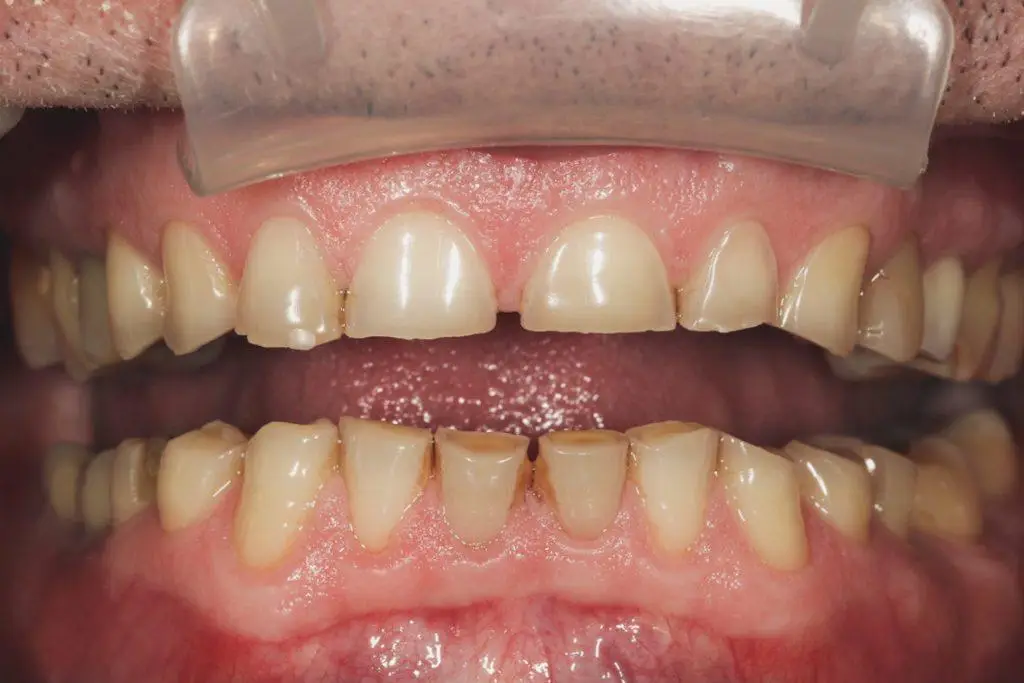
- wear or flattened teeth;
- small cracks or chipped pieces of tooth;
- a partner who hears grinding sounds at night.
Some of these complaints can also have other causes. Therefore, the presence of a single symptom does not automatically mean that you have bruxism.
What causes teeth grinding?
There is usually not one clear cause.
Various factors can play a role in bruxism. Stress and tension, for example, can be associated with more clenching or grinding, especially during the day.
Sleep bruxism is more complex and is related to processes during sleep. Certain lifestyle habits, sleep disorders, and some medications can also have an influence.
Therefore, it is wise not only to look at the teeth but also at when the complaints occur and which factors may contribute.
Can stress cause teeth grinding?
Stress can play an important role, especially in people who unconsciously tense their jaws during the day.
You may notice that your teeth are constantly making contact during concentrated work, driving, or in stressful situations.
Awareness can then be a first step.
At rest, the teeth should normally not be firmly pressed together constantly. Therefore, try to regularly check whether your jaw is relaxed.
Can teeth grinding damage your teeth?
Long-term or heavy loading can have consequences for teeth and restorations.
For example, wear can occur, and under high pressure, pieces of tooth, fillings, or other restorations can be damaged.
The chewing muscles can also become overloaded, causing pain or fatigue around the jaw.
The extent of the risk varies greatly per person. Therefore, it is important not only to look at whether someone grinds but especially whether complaints or damage actually occur.
Does teeth grinding have anything to do with jaw pain?
It can.
Prolonged tensing of the chewing muscles can contribute to fatigue, tension, and pain around the jaw.
However, not every form of jaw pain is caused by teeth grinding. Problems with the jaw joint, muscles, and other structures can cause similar complaints.
In the case of persistent jaw pain, an examination is therefore important before a treatment is chosen.
How does the dentist diagnose teeth grinding?
During a check-up, the dentist can look for signs of excessive loading.
For example, they look at wear, damage to teeth and restorations, and the way the teeth make contact.
In addition, your symptoms are important. Do you mainly suffer in the morning? Do you clench during the day? Has anyone heard you grinding?
Based on the examination and your symptoms, it can be determined whether further treatment or additional research is useful.
How is teeth grinding treated?
There is no single treatment that is suitable for everyone.
The approach depends on your symptoms, any damage to the teeth, and possible factors influencing the grinding or clenching.
In the case of daytime clenching, awareness and learning to relax the jaw muscles can be important, for example.
For muscle or jaw complaints, exercises or guidance by a specialized jaw physiotherapist can sometimes be part of the treatment.
When there is clear tooth wear or a risk of further damage, a bite guard may be considered.
What does a bite guard do for teeth grinding?
A bite guard, also called a night guard or splint, is a removable device worn over the teeth.
The main goal is to protect the teeth and restorations from direct wear and loading.
A bite guard can also influence muscle or jaw complaints in some patients, but it is important to know that a guard does not automatically remove the cause of bruxism.
The device must be properly adjusted to the teeth and the bite. Therefore, an individually manufactured and checked guard is preferred over just any random solution.
What can you do yourself against clenching and grinding?
Especially with daytime clenching, it can help to become aware of your jaw muscles.
For example, check several times a day whether you are clenching your teeth unnecessarily. Try to keep the lower jaw relaxed when you are not eating or swallowing.
Sufficient sleep, relaxation, and reducing factors that clearly worsen your symptoms can also help.
Do you mainly have symptoms at night or clear wear? Then have your teeth assessed instead of only taking measures yourself.
When should you see a dentist for teeth grinding?
Make an appointment if, for example, you see increasing wear, regularly wake up with painful jaw muscles, or notice that teeth, fillings, or other restorations are being damaged.
Further investigation is also wise in the case of persistent jaw pain, limited mouth opening, or symptoms that persist despite previous treatment.
Sometimes an additional assessment by, for example, a jaw physiotherapist or a dentist with specific expertise in the field of jaw complaints is necessary.
Treating teeth grinding in Leiden
Do you suspect that you grind your teeth at night or do you notice that you clench a lot during the day?
At We Smile Tandartsen in Leiden, we can check your teeth for wear and other signs of overloading. We will discuss your symptoms and look at which approach may be appropriate in your situation.
When protection of the teeth is necessary, we can assess whether a custom-made bite guard is suitable. For more complex jaw complaints, an additional specialized assessment may be required.
Are you suffering from teeth grinding, jaw pain, or wear? Then make an appointment to have your teeth and symptoms assessed.